
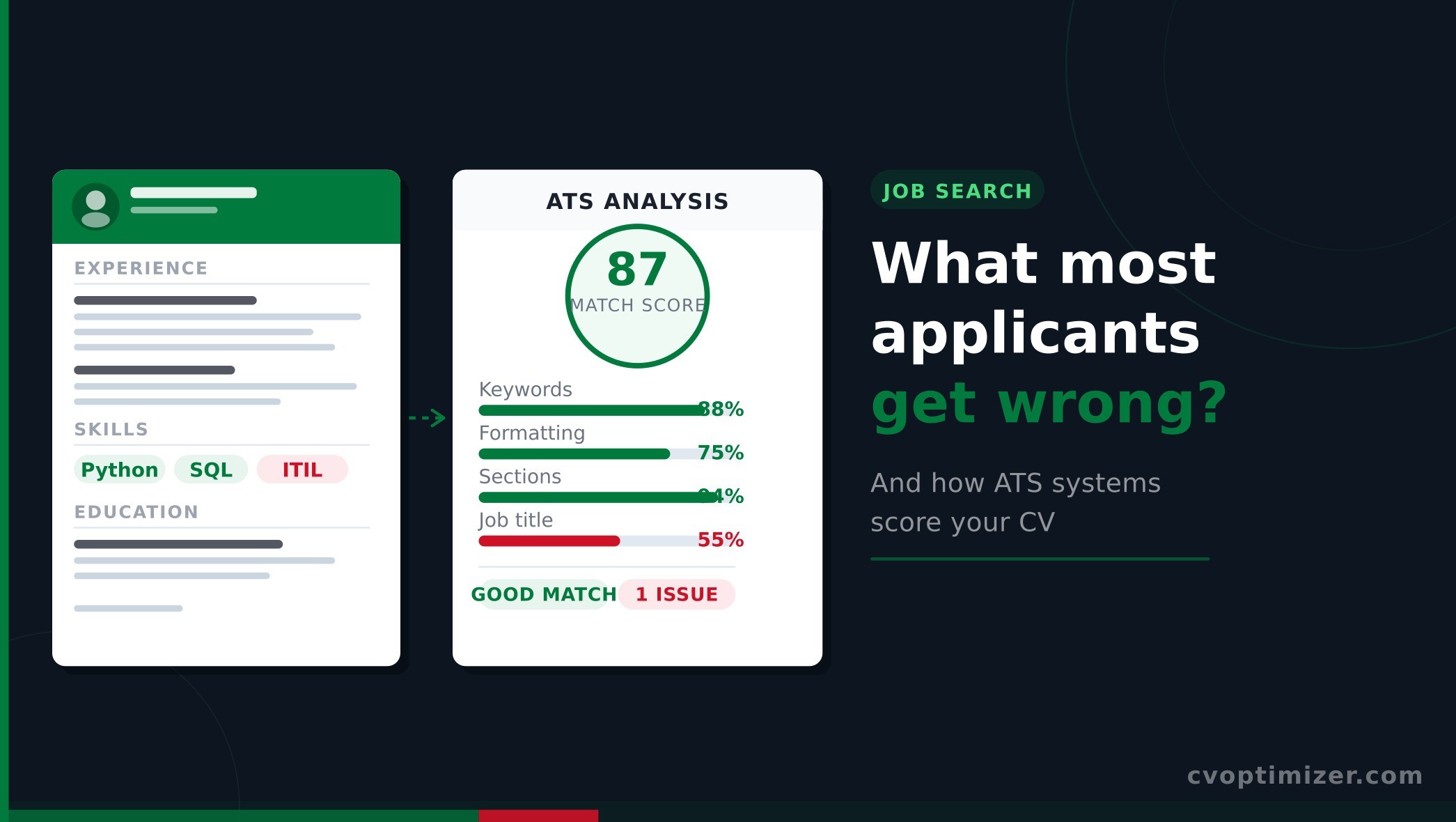
Applicant Tracking Systems don't just screen CVs out. It ranks CV top to bottom so that recruiters can choose a range of CV to look at. They don't check all the CVs that pass the minimum threshold. So the thing is even if your CV passes the ATS system that does not mean recruiters are checking your CV or its ranking at the top of the list.
Matching keywords
The ATS system does look for keywords which is very true however, the modern ATS checker goes beyond than the exact match counting. What they use now is called semantic parsing. That means they are not just looking at the vocabulary but also the actual context. For example, if you write "led a cross functional team" instead of "team leadership" which might be fine or might not, depending on the system. The problem is you don't know that for certain that's why the best bet is to lean towards the languages in the job description itself. The word frequency matters too, but not always the way people think. Stuffing some keywords too many times does not mean it's going to score high. What most systems do is use weight diminishing returns after the second or third instance. Also, some systems consider word repetition as a red flag. Context beats counts. If you use bullet points and mention meaningful context under the relevant role it will score higher than the keyword stuffing into random places.
Which sections actually get parsed?
This is where a lot of CVs fail. ATS systems are parsing structured data, not reading prose. What the system is trying to fetch is your job title, your employer, dates, skills and education. If you format your CV wrong it will confuse the parsing and information will get misassigned resulting in a fetch failure. Your CV won't pass through the ATS system. Now, if you are using column layouts that's even worse because it will parse as scramble text when an ATS reads it. Non-standard formatting can cause systems to merge your skills with your job titles or drop employment dates altogether. It will remove dates or completely ignore text boxes, headers and tables. If the content is not on the main body the system will not scan it at all. As for the job title it is just as important. You see the ATS system uses the job title to calibrate seniority and relevance. Creative job titles often fail to match the standard terms for example if you use creative titles like 'Growth Ninja' or 'Success Guru' might sound cool, but they confuse resume scanners. So using a standard job title significantly boosts your relevance score.
What most candidates get wrong?
Most people think their CV is failing because they did not optimise the keywords properly but that's not always the case it's because they are optimising the wrong parts. They focus on polishing the personal statement with keywords because it feels like the most important thing to do and often ignore the work history descriptions. However, the ATS system checks your employment history heavily because that's where information such as seniority, duration, and role relevance lives. If you have weak bullet points under the roles and have a strong personal statement that does not mean your CV will pass, it is most likely to underperform.
The second most common error is treating every application the same. There was a time when one good CV could do the job. You could apply to multiple jobs of the same field. However it is not applicable for today's day and age. Even if you are applying in the same field the job description always differs. Tailoring your CV is not optional anymore if you want your CV to get past the ATS system and rank at the top. You might not realise this but date formatting is very crucial because inconsistent formatting can confuse parsing logic and cause entire roles to be dropped from your timeline. Use the same date format throughout the whole CV.
Skill sections
If you put whatever comes in mind as a skill you might be giving more noise to the ATS system. It is better to keep that in mind that skill should be relevant to the job description that you are applying for. Also it has to be something that your main body content does not already have. They're also useful for skills that don't naturally appear in role descriptions, technical tools, certifications, languages, platforms. It turns into padding when you repeat what you've already proven, or when you list generic soft skills that scanners completely ignore.
What Most Advice Misses
Your CV getting passed through the ATS system is not the finish line. When a recruiter reads your CV and 10 seconds before deciding whether to go deeper. You have to keep in mind that making the CV for humans to read, not just to pass the ATS system. Even if your CV ranks first but reads like a keyword will definitely lose to the one that ranks slightly lower but makes a clear and compelling case. The Idea is to make your bullet points human readable, using clear and concise language that shows what you did and what's the outcome of it. Then review the job descriptions and make sure all the relevant terms are mentioned. Do it naturally so that it does not sound like you are forcing it in and trying to game the system, which, if the recruiter notices, is worse than not ranking at all.
Understanding how the ATS system works in one of the fastest ways to improve your CV and getting a chance to land an interview. Our CV optimizer tool can help you with that, by checking your CV and optimizing it based on the specific job description and showing you exactly where the score is coming from.